Peripheral neuropathy · St. Louis
With peripheral neuropathy, your feet are reporting a fire that started in your bloodstream, not your shoes.
Peripheral neuropathy, the burning, numbness and unsteadiness on your feet, usually traces back to small nerve fibers damaged by years of metabolic stress. Most often that is diabetes, but not only diabetes. The nerve is the messenger. The disease is upstream, and treating only the message leaves the disease running.
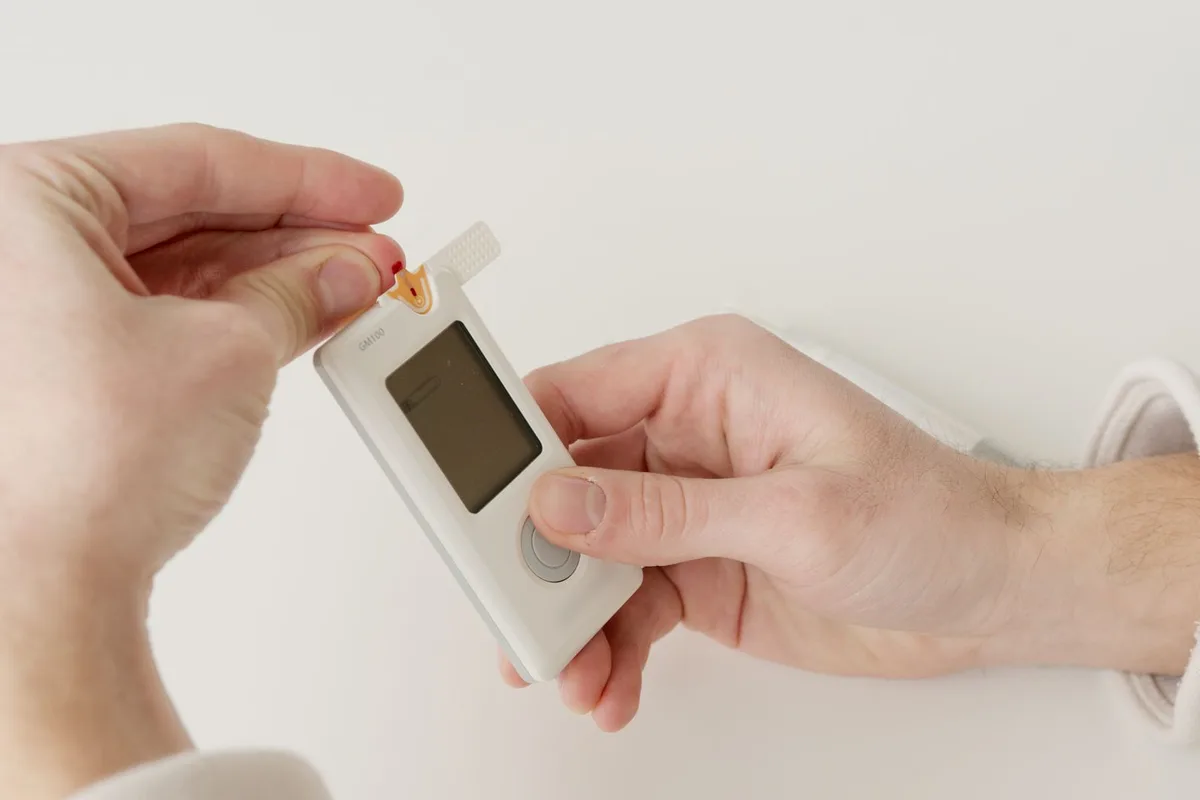
What does peripheral neuropathy feel like, and what causes it?
Peripheral neuropathy shows up first in the longest nerves in the body, which is why it starts in the feet and climbs. It follows a stocking-glove pattern. It burns or zaps at rest. Feet go numb enough that patients step on things without noticing. Balance gets shaky enough that falls become a real risk before pain ever does. Diabetic neuropathy is the most common cause we see. But prediabetes, alcohol, chemotherapy, autoimmune disease, and B12 deficiency all damage the same small fibers. Each takes a different route. That is why the workup does not stop at a glucose number.
Why does diabetes damage the nerves in your feet?
Two biological drivers do most of the damage. The first is hyperinsulinemia (too much insulin in the blood) and insulin resistance themselves. Years of high insulin, not just high glucose, injure nerve fibers directly. They predict neuropathy even in patients whose blood sugar looks fine on paper. The second is a combined failure of the tiny blood vessels and the mitochondria (the cell’s power plants). The small vessels feeding the nerve narrow and stiffen, starving the fiber of oxygen. Meanwhile, the mitochondria inside the nerve cell lose their ability to buffer the oxidative stress that follows. The nerve is, quite literally, running out of both fuel and the machinery to burn it cleanly. A third driver is economic and behavioral. The diet that reverses insulin resistance costs more and takes more time than the diet that caused it. A patient working two jobs on a fixed income is not choosing neuropathy. They are choosing the food and the schedule available to them. We build the plan around it.
I spent the first twenty years of my career telling patients their A1C was “not too bad” because it sat just under the diabetes cutoff. I was wrong. The nerve damage in prediabetes starts well before that line, and by the time a chart says diabetic, the small fibers have often been losing ground for years. That changed how early we look now.
How is peripheral neuropathy diagnosed?
The exam covers monofilament testing for light touch, vibration sense, reflexes, and a look at gait and balance. Beyond the exam, bloodwork is part of the first visit, not an add-on. We check fasting insulin and HbA1c at minimum, because insulin resistance can show up years before an abnormal A1C. Where the pattern is unusual, uneven between sides, or getting worse unusually fast, we widen the workup. We do not assume diabetes and move on.
What treatments help peripheral neuropathy pain?
AURICULAR NERVE STIMULATION
For diabetic peripheral neuropathy specifically, we offer a percutaneous nerve stimulator applied entirely at the ear. Four small titanium electrode arrays are placed in a roughly 30-minute in-office procedure under topical anesthesia. They target the auricular branches (nerve branches in the ear), so the device acts on the vagal pathway rather than on the painful nerve directly. There is no sedation, no activity restriction afterward, and nothing left permanently implanted; the electrodes come out at the end of a standardized 20-day course. A 2025 retrospective chart review of 83 patients with painful diabetic neuropathy reported substantial drops in reported pain scores over 90 days. It also reported improvements in HbA1c and glucose. But the study was uncontrolled and non-randomized, and its own authors named placebo effect and regression to the mean as confounders they could not rule out. We offer this device as a real option with real early signal, not as a cure with proof behind it yet, and we say so plainly before you decide.
SPINAL CORD STIMULATION
Some painful diabetic neuropathy has not responded to medication and topical or lifestyle measures. For it, spinal cord stimulation has meaningfully stronger evidence behind it. A 2026 meta-analysis of randomized trials looked at patients who had SCS added to conventional management. It found clinically significant improvements in both pain and quality of life. Complication rates did not rise. It is a bigger step. A trial period comes first, then a permanent implant if the trial succeeds. We save it for patients who have used up the smaller steps first.
The terrain program
Neither device reverses insulin resistance. Reducing the driver that is killing the nerve fiber in the first place is the terrain half of the plan. That means time-restricted eating. It means targeted movement that helps blood flow in the tiny vessels without hurting already-fragile feet. It also means the same in-house Acceptance and Commitment Therapy we build into every chronic pain plan, because the frustration of a numb, unpredictable foot has a behavioral cost of its own. See metabolic health and pain for how that piece is structured.
Can surgery fix peripheral neuropathy?
Surgery does not treat diabetic peripheral neuropathy. No operation repairs a small fiber damaged by years of hyperinsulinemia and starved blood flow. We will tell you that directly rather than let an implant conversation suggest otherwise. The stimulator devices above are placed surgically, but they change the pain signal. They do not reverse the underlying nerve injury. Nerve decompression surgery has a role in a narrower, different diagnosis — a single nerve physically trapped at a specific site. That difference is worth getting right before anyone operates.
Red flags that change the visit
- A foot ulcer, wound, or area of skin breakdown — needs same-day wound care evaluation no matter the pain level, because numbness hides infection until it is advanced.
- Rapid, asymmetric onset over days rather than months — points away from typical diabetic neuropathy and toward a cause that needs a faster workup.
- Weakness, not just numbness — a motor (muscle) problem changes the possible causes and the urgency.
- New falls or a sudden change in balance — needs evaluation before the next fall causes a fracture. See when it is an emergency.
Frequently asked questions
Do I need a referral for neuropathy treatment?
No. You can schedule directly for burning or numb feet. Some insurance plans want a referral from your primary care doctor on file before they pay, and we will tell you if yours does. Referrals and pain care explains which plans ask.
Is the ear device the same as an implant?
Nothing stays in permanently. The electrode arrays are removed at the end of the 20-day course. It is a device classification the FDA lists as a peripheral nerve stimulator for pain relief, placed and removed in-office. Peripheral nerve stimulation covers the broader category this device belongs to.
Will normalizing my blood sugar reverse the nerve damage?
It stops the damage from getting worse more reliably than it reverses what is already lost. How much recovers depends heavily on how long the nerve was starved before treatment started. That is the case for early evaluation rather than waiting for pain to become severe. See when injections stop working for how we reassess a plan that has stalled.
Do I need to be diabetic for this to apply to me?
Prediabetes, alcohol use, certain chemotherapy drugs, and B12 deficiency all cause peripheral neuropathy. They work through overlapping but distinct mechanisms. The workup accounts for that from the first visit, with or without a diabetes diagnosis. What to expect covers how that first visit is structured.
Is this covered by insurance?
Coverage depends on your specific plan and documented medical necessity, and prior authorization is not itself a promise of payment — we walk through what your plan covers before any device or procedure, not after. Peripheral nerve stimulation for chronic intractable pain is a covered Medicare category nationally, which is a starting point, not a guarantee; spinal cord stimulation follows a similar coverage path.
Is peripheral neuropathy curable?
Nerve damage that has already happened does not reliably reverse. No operation repairs a small nerve fiber injured by years of high insulin and poor blood flow. The stimulator devices ease the pain signal without healing the nerve. What treatment can do is stop the damage from getting worse. That is why we look early and treat the metabolic driver, not just the burning.
How do you stop peripheral neuropathy from getting worse?
Reduce the driver that is damaging the nerve. For most patients that is insulin resistance. The plan targets it with time-restricted eating and with movement that improves blood flow without hurting fragile feet. Bloodwork at the first visit, including fasting insulin and HbA1c, shows where you stand, because insulin resistance can show up years before an abnormal A1C.
What is the most effective treatment for neuropathy in the feet?
The plan that works treats the pain and the cause together. For diabetic neuropathy we offer an ear-based nerve stimulator used for a 20-day course. When pain has not responded to medication, topical or lifestyle measures, we also offer spinal cord stimulation, which has stronger evidence. Alongside either device, the terrain program goes after insulin resistance, the disease underneath the nerve.
When should I see a doctor for numb or burning feet?
Early, before the pain turns severe, because nerve damage in prediabetes starts well before the diabetes cutoff. Some signs need faster care. A foot ulcer or wound needs same-day wound care evaluation. Numbness that comes on quickly on one side, new weakness, or new falls and balance changes all call for a prompt visit.
Related reading
- Peripheral nerve stimulation
- Spinal cord stimulation
- Metabolic health and pain
- Complex regional pain syndrome
- Opioid stewardship
Sources
- Staats PS et al. Combined minimally invasive vagal cranial nerve and trigeminocervical complex peripheral nerve stimulation produces prolonged improvement of severe painful peripheral neuropathy and hyperglycemia in type 2 diabetes. Frontiers in Neuroscience, 2025. PubMed 40933195
- Awad G et al. Spinal Cord Stimulation Improves Pain and Quality of Life in Painful Diabetic Neuropathy: A Meta-Analysis of Randomized Trials. Neuromodulation, 2026. PubMed 41984006
- Callaghan B, Feldman E. The metabolic syndrome and neuropathy: therapeutic challenges and opportunities. Annals of Neurology, 2013. PubMed 23929529
We will treat the nerve and the blood feeding it, not just the burning
A neuropathy plan built on devices alone leaves the disease driving underneath it. We will tell you what the bloodwork shows, what device or block fits your pattern, and what the terrain plan looks like — together, not as separate appointments.
4479 Woodson Rd, Suite 401
St. Louis, MO 63134
Next to St. Louis Lambert International Airport, off I-70 at Woodson Road.