Ketamine for CRPS · St. Louis
The injury healed months ago. Ketamine for CRPS targets the nervous system that never got the message.
Ketamine treats complex regional pain syndrome (CRPS) by blocking the NMDA receptor that drives central sensitization (a nervous system stuck on high volume). We offer it under the tongue, as a nasal spray, as a compounded cream, and by IV infusion. The route is chosen on severity and response.
How does ketamine work for CRPS?
The NMDA receptor sits in the spinal cord and brain. It is central to how pain signals get louder over time. In complex regional pain syndrome, a first injury — often minor, sometimes barely remembered — sets off an outsized response that keeps feeding itself. The limb turns extremely sensitive, discolored and swollen. It hurts far more than the tissue would explain. NMDA receptor activation is a major driver of that amplification. That is why blocking it with ketamine matters. It is one of the few treatments aimed straight at the central mechanism, not only at the limb.
How is ketamine given for CRPS?
IV INFUSION
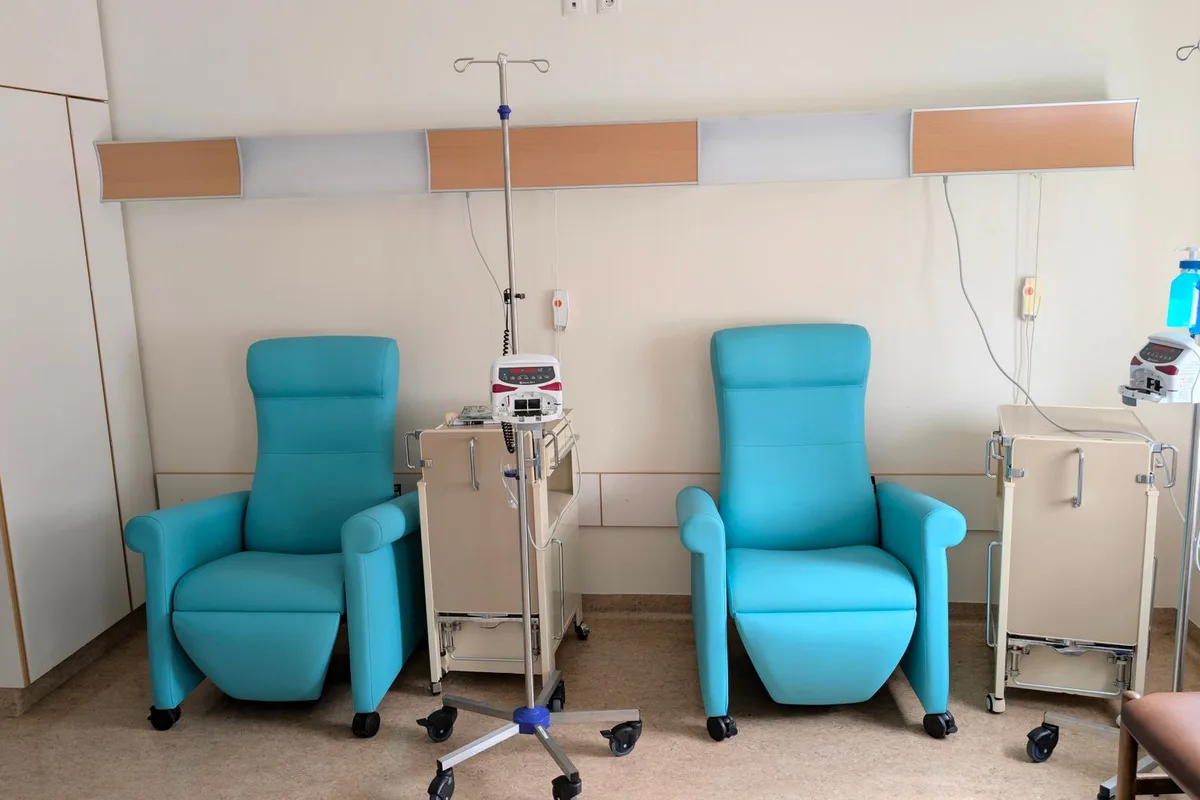
Given in the office under monitoring, at sub-anesthetic doses (below the dose that puts you under), over a set time. This route has the most direct trial evidence behind it. It is the option for more severe or stubborn cases.
SUBLINGUAL
A lower dose you take yourself, absorbed under the tongue. It is used between infusions or for milder cases. Less of the drug reaches the whole body than with IV dosing, so the effect is gentler and less predictable.
INTRANASAL
Given as a nasal spray that crosses the lining of the nose quickly. It reaches the central nervous system without an IV line. The dose is adjusted in clinic based on how you respond. Follow-up visits track whether the effect is holding, rather than nonstop monitoring during a session.
TOPICAL, COMPOUNDED
A compounded cream that pairs ketamine with lidocaine and an anti-inflammatory, rubbed on the skin of the affected limb. It works out at the nerve endings, the touchy ones that make a bedsheet feel like sandpaper, not on the spinal cord. So it is a tool for the allodynia (pain from light touch) of CRPS more than for the deep ache. The whole body gets the least drug of the four routes. That is why it can sit alongside the others and be used at home between visits.
Which route, at what dose and how often, is a clinical call. It is built around severity, response and what you can tolerate. It is not a package deal, and not offered as a pre-set series.
The terrain of a sensitized nervous system
Central sensitization does not stay inside the injured limb, and it does not run on NMDA activity alone. Chronic pain itself drives whole-body inflammation that keeps the amplification loop running. Sleep in CRPS is often wrecked by a limb that burns at rest. Those are two biological drivers feeding each other in a loop ketamine alone cannot fully break. The third driver is social. Living with a limb that looks wrong is lonely, and some patients report disbelief from people who cannot see an obvious injury. That keeps the nervous system on high alert. Ketamine turns down the amplifier. This practice pairs it with the same attention to sleep and nervous system arousal used across every chronic pain plan here, because a quieted receptor sitting in an untreated terrain tends not to stay quiet.
Does ketamine work for CRPS, and how long does relief last?
A 2019 systematic review and meta-analysis of ketamine infusions for chronic pain in general found modest, time-limited benefit across the pooled trials. CRPS was among the better-represented conditions. Two systematic reviews specific to CRPS — one from 2015, one from 2018 — both found real short-term pain reduction from ketamine infusion. Both flagged the same limit. The trials are small, use mixed dosing plans, and rarely follow patients past a few months. So how long relief lasts beyond that window is truly not well established. The people studied also lean toward patients who had already failed several other treatments. That is close to who ends up on this page. But it means the numbers describe a hard-to-treat group, not CRPS in general.
Intranasal ketamine sits between sublingual and IV dosing. It is absorbed quickly through the lining of the nose and reaches the central nervous system without an IV line. Its evidence base is the one built for the esketamine nasal spray, plus a smaller ketamine literature in nerve pain. We read that as supportive, but still smaller than the infusion trials. We tell patients directly: the trial evidence supports trying this, especially after other approaches have not held. It does not yet support promising a set length of relief. That gap gets filled by watching how your own nervous system responds, not by a number from a paper.
Monitoring
IV infusions are done with nonstop blood pressure, heart rate and oxygen monitoring the whole time, because ketamine can raise blood pressure and heart rate and, even at sub-anesthetic doses, can cause dissociative effects — a floaty, detached feeling some patients find unpleasant. You will not drive yourself home after an infusion. Sublingual and intranasal use is checked at follow-up visits, not by nonstop monitoring, since the peak level and the dose are smaller. We still track blood pressure and ask directly about mood and dissociative symptoms at each check-in.
What happens on the day of an infusion
- Baseline vitals and pain score recorded before the line is placed.
- IV started, blood pressure, heart rate and oxygen monitoring connected.
- Infusion run at a sub-anesthetic dose over a set time, with monitoring continuous throughout.
- Vitals and dissociative effects checked periodically during the infusion, and the rate adjusted if needed.
- Recovery period after the infusion ends, then home with a driver — you will not be cleared to drive yourself.
Who should not take ketamine for CRPS?
Poorly controlled high blood pressure or significant heart disease is a concern for IV dosing in particular. That is because ketamine can raise blood pressure and heart rate. A history of psychosis or an active, unstable psychiatric condition is a serious caution, since the detached effects can be truly distressing there. A history of substance use disorder involving ketamine or a similar drug needs an honest talk first. That is not an automatic no, but a reason to go slower and watch closer. Pregnancy rules out systemic (whole-body) dosing.
What are the side effects of ketamine for CRPS?
During an IV infusion: higher blood pressure and heart rate, nausea, and dissociative effects that fade as the infusion ends and the drug clears. Bladder irritation has been reported with frequent, high-dose, long-term ketamine use. Most of those cases come from recreational use, not the supervised, dose-limited plans used here, but you should know about it. Sublingual and intranasal use can cause drowsiness, mild dissociation and, with the nasal route, brief nasal irritation. Both carry clearly less whole-body risk than an infusion.
Common questions
Is this the same as ketamine used recreationally?
Same molecule, a completely different setting. The doses used here are lower, given under monitoring, at a set interval, for the defined medical purpose of treating complex regional pain syndrome — not the pattern associated with recreational misuse.
How is this different from a sympathetic block for CRPS?
Different mechanism, and often used together. A sympathetic block addresses the blood-vessel and autonomic part; ketamine addresses central sensitization directly. Many CRPS treatment plans use both.
How many infusions will I need?
No fixed protocol. We start low, measure the response, and adjust how often and how much from there. It is the same approach used for every repeat treatment at this practice, described further at when injections stop working.
Will insurance cover this?
Coverage varies and prior authorization, where required, is not a promise of payment. We walk through the coverage picture at your first visit, before anything starts, not after.
Can I be on other pain medications while doing this?
Often yes, though we review your full medication list first for interactions. If opioid use is part of the picture, it is discussed as one piece of a larger plan — see opioid stewardship.
Which ketamine route do most patients use?
Sublingual and intranasal ketamine are what nearly all of our patients use. A compounded cream with lidocaine and an anti-inflammatory covers the skin-level sensitivity, the kind that makes a bedsheet feel like sandpaper. IV infusion is available but is rarely the route chosen. Which route fits depends on your severity, your history and how your nervous system responds.
Can I use ketamine for CRPS at home?
Some forms, yes. You take the sublingual dose yourself under the tongue. You rub the compounded cream on the affected limb at home between visits. The nasal spray dose is set in clinic based on how you respond. For these routes, follow-up visits check blood pressure, mood and any detached feelings. IV infusions happen only in the office, under monitoring.
What does a ketamine infusion feel like?
Even at the low, sub-anesthetic doses used here, ketamine can cause a floaty, detached feeling. Some patients find it unpleasant. Blood pressure and heart rate can rise, and some people feel sick to their stomach. These effects fade as the infusion ends and the drug clears. Your vitals are watched the whole time, and the rate is adjusted if needed.
Can I drive after a ketamine infusion?
No. After an IV infusion you stay for a recovery period and then go home with a driver. You will not be cleared to drive yourself, because even a sub-anesthetic dose can leave a detached, dissociative feeling and raise blood pressure and heart rate. Plan the ride before the appointment so the day runs smoothly.
Related reading
- Complex regional pain syndrome
- Sympathetic nerve blocks
- Spinal cord stimulation
- Opioid stewardship
- Sleep, movement and behavior
We will pick the route based on your nervous system, not a default protocol
IV, intranasal, sublingual and topical are four different tools, not four intensities of the same one. Sublingual and intranasal are what nearly all of our patients use; a compounded topical with lidocaine and an anti-inflammatory covers the skin-level allodynia; IV infusion is available and rarely the route chosen. We will tell you plainly which fits your severity and history and why.
4479 Woodson Rd, Suite 401
St. Louis, MO 63134
Next to St. Louis Lambert International Airport, off I-70 at Woodson Road.
Sources
- Orhurhu V et al. Ketamine Infusions for Chronic Pain: A Systematic Review and Meta-analysis of Randomized Controlled Trials. Anesthesia & Analgesia, 2019. PubMed 31082965
- Connolly SB et al. A systematic review of ketamine for complex regional pain syndrome. Pain Medicine, 2015. PubMed 25586192
- Zhao J et al. The Effect of Ketamine Infusion in the Treatment of Complex Regional Pain Syndrome: a Systemic Review and Meta-analysis. Current Pain and Headache Reports, 2018. PubMed 29404715
- Sawynok J. Topical and peripheral ketamine as an analgesic. Anesthesia & Analgesia, 2014. PubMed 24945127