How long nerve blocks last
Some nerve blocks last an afternoon on purpose. That is not a failure, it is the test working.
How long a nerve block lasts depends entirely on what it was built to do. A diagnostic block that wears off in a few hours did its job. It did that job the moment it confirmed the target. A therapeutic block is a different tool. It is measured in weeks or months, not hours.
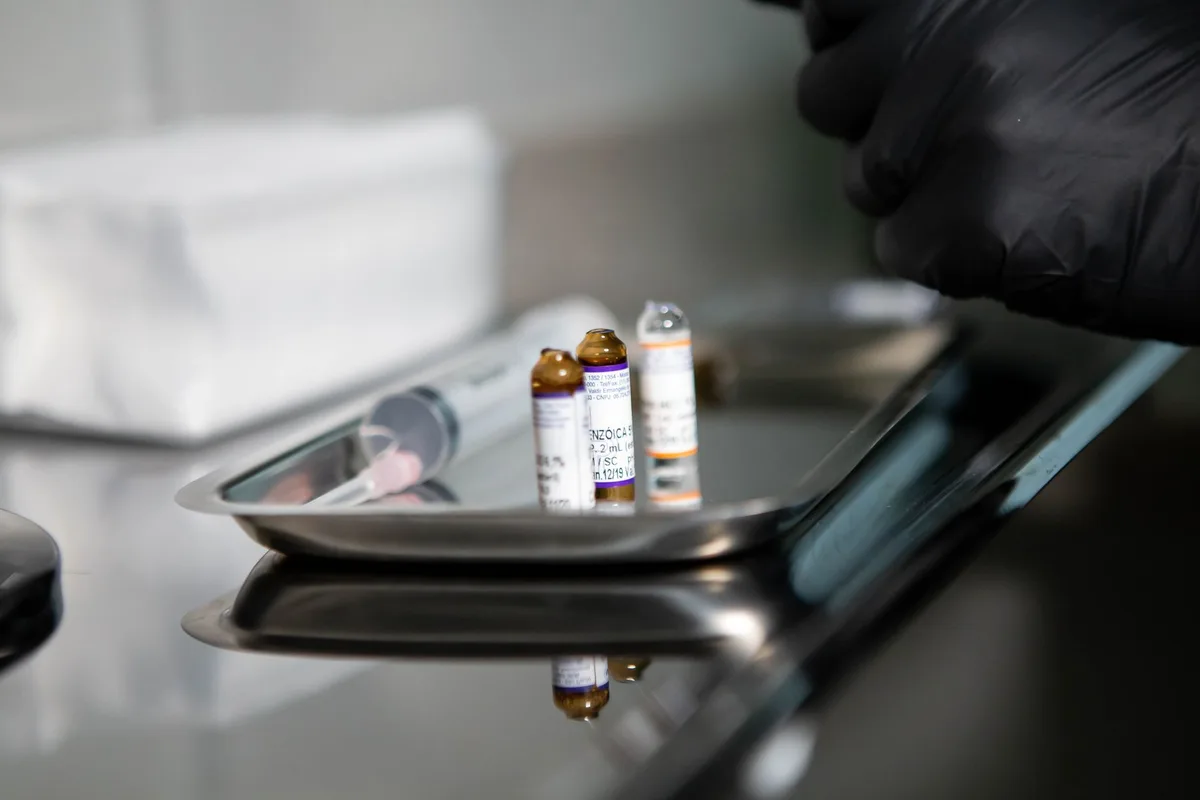
Two different jobs
A diagnostic block exists to answer one question: is this specific nerve or joint the source of your pain? Nothing more. Its short life is not a design flaw. It is what makes it useful, because a short, predictable window lets us match when relief started and stopped against what you were doing. A therapeutic block exists to reduce pain for a real stretch of time. Its length is the whole point. Most letdowns with nerve blocks come from mixing the two up. People expect a diagnostic block to hold for months. Or they judge a therapeutic injection by how it feels in the first hour.
The three timeframes
LOCAL ANESTHETIC — HOURS
Bupivacaine and similar drugs usually give relief for four to twelve hours. This is the workhorse of diagnostic blocks. It is also the quick-relief part of most therapeutic injections.
STEROID — WEEKS TO MONTHS
Corticosteroid takes two to seven days to build to its full anti-inflammatory effect. Where it works, relief often lasts weeks to several months. It varies widely by condition and by patient.
RADIOFREQUENCY ABLATION — MONTHS TO A YEAR OR MORE
Ablation stops a nerve from carrying its signal. It does not just quiet the inflammation around it. So it usually holds for six months to a year, sometimes much longer, until the nerve grows back.
What the duration tells the physician
Duration is not just an outcome. It is data. A well-known randomized trial looked at medial branch blocks before radiofrequency denervation. It found that how well a diagnostic block predicts who will gain from ablation depends heavily on protocol. That includes how strict the relief cutoff is and whether a second confirmatory block is used. That is part of why we do not treat one good diagnostic response as the final word. The pattern across a block, and sometimes a second one, is more reliable than one data point. Say relief tracks closely with when the local anesthetic should be wearing off. That timing itself confirms the drug reached the target. Say pain returns before the anesthetic should have worn off, or does not respond at all. That mismatch tells us as much as a clean positive result. It usually means the wrong structure was blocked.
Why “it only lasted a few hours” is not bad news
Patients are often let down when a block wears off by evening. They hoped it would fix their pain, and did not know it was built to fade. Consensus guidelines on facet joint interventions are clear on this. A diagnostic medial branch block is expected to last only as long as the local anesthetic used. A positive, repeatable response over that short window is the finding that opens the door to a longer-acting option. If your block was diagnostic and it worked for the hours it was meant to, that is a successful test. It is not a failed treatment. Ask which kind of block you are getting before it happens. Then the time it lasts will match what you were told to expect.
Common questions
Why did my block wear off faster than expected?
Your body chemistry, injection technique and anatomy all affect duration somewhat. But a block that fades unusually fast is worth reporting. It can change how we read the result. See medial branch block for how a diagnostic block feeds straight into the choice of ablation.
Can a diagnostic block be made to last longer?
Not in a useful way. Making it last longer would blur the very timing it exists to give us. If you want longer relief, the answer is a therapeutic option like radiofrequency ablation, not a longer-acting diagnostic block.
Why did my steroid injection only last three weeks last time?
Relief from steroid varies widely. It tends to get shorter when the root driver is left alone. Ongoing mechanical irritation or body-wide inflammation both blunt how long a local anti-inflammatory holds. See when injections stop working for how we investigate a shrinking window.
Does a longer-lasting block mean it worked better?
Not always. It means a different tool was used. A short diagnostic block that clearly finds the pain source is just as successful, by its own standard, as a therapeutic block that holds for months. In the same way, an epidural steroid injection is judged by relief and function rather than duration alone.
Related reading
We will tell you which kind of block you are getting, and what its clock looks like
Before any injection, you will know whether you are being tested or treated, and roughly how long that specific answer should hold.
4479 Woodson Rd, Suite 401
St. Louis, MO 63134
Next to St. Louis Lambert International Airport, off I-70 at Woodson Road.
Sources
- Cohen SP et al. Consensus practice guidelines on interventions for lumbar facet joint pain from a multispecialty, international working group. Regional Anesthesia & Pain Medicine, 2020. PubMed 32245841
- Cohen SP et al. Effectiveness of Lumbar Facet Joint Blocks and Predictive Value before Radiofrequency Denervation: The Facet Treatment Study (FACTS), a Randomized, Controlled Clinical Trial. Anesthesiology, 2018. PubMed 29847426
- Heppolette CAA et al. Clinical Pharmacokinetics and Pharmacodynamics of Levobupivacaine. Clinical Pharmacokinetics, 2020. PubMed 32034727