WHEN NOT TO WAIT
Most pain can wait for an appointment. Seven signs on this list cannot wait for anything.
This page exists so you can check yourself against a short, specific list before you call a clinic that is not open right now. If any of these describe you, the next call is 911 or the nearest emergency department, not us.
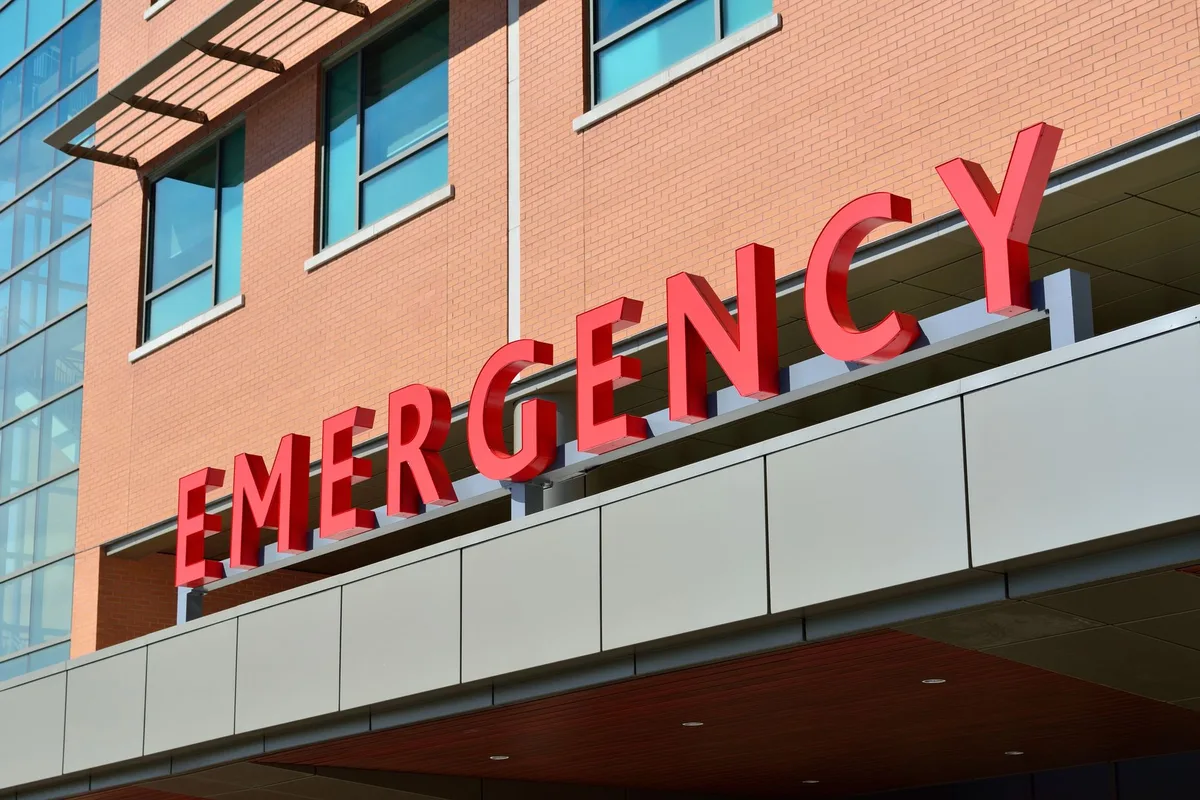
Seven signs that do not wait for an appointment
- You have lost control of your bladder or bowel, or you have new numbness in the area you would sit on. This combination points to the bundle of nerves at the bottom of the spinal canal being compressed, and the window to reverse it before the damage is permanent is measured in hours, not days.
- A limb is getting weaker, not just more painful, and it is changing by the day or the hour. Pain that stays the same is one thing. Strength that is actively dropping is a nerve being damaged in real time.
- You have a fever along with new or worsening back or neck pain. An infection in or around the spine is rare, but it is dangerous enough that the combination gets ruled out immediately rather than watched.
- Severe pain started right after a fall, a car crash, or another significant impact. The concern is a fracture or instability that has not been imaged yet, and moving around on an unstable spine before that is confirmed carries real risk.
- You have a history of cancer and new pain that does not fit your usual pattern. Bone is a common site for metastatic disease to show up first as pain, and that possibility gets checked, not assumed away.
- A limb has become swollen, discolored, unusually sensitive to touch, or a different temperature than the rest of you after a minor injury, and it is getting worse quickly. This pattern can be the early, fast-moving phase of a nerve-driven pain syndrome, and early treatment changes the outcome. Complex regional pain syndrome.
- Pain that feels like it is coming from your back is paired with chest pressure, shortness of breath, or abdominal pain. The spine is not the only structure that can refer pain backward, and a handful of the causes that do — cardiac, vascular, abdominal — are not ones any pain clinic should be managing on an outpatient basis.
IF ANY OF THIS IS YOU RIGHT NOW
Go to the nearest emergency department or call 911. Do not wait for a callback, and do not wait to see if it settles down overnight. These are the situations emergency medicine exists for.
What this practice is for instead
Almost everything else — pain that has been building for weeks or years, pain after an injury that has already been checked out and cleared of the items above, pain that comes and goes with activity, pain that has outlasted physical therapy or medication — is exactly what this practice is built to work through. That work happens on a schedule, with a history and an exam before any procedure, because the diagnosis matters as much as the treatment. What to expect at the first visit.
If you went to the emergency department for one of the seven signs above and were sent home with a clearer picture but no lasting plan, that is a normal and expected handoff, not a dead end. Bring the discharge paperwork to your first visit here and we will pick the thread up from there.
Common questions
I went to the ER and they said it was nothing serious. Why does it still hurt?
An emergency department rules out the dangerous causes on this list; it is not built to run a full diagnostic workup for a pain pattern that will persist for months. That workup is what a follow-up visit here is for. What to expect.
Can I call this office instead of going to the ER if I am not sure?
If any item on this list applies, go straight to the emergency department — do not use a clinic phone line to triage something on this list. For everything else, contact us and we will help you figure out the right next step.
My pain started right after a car accident. Is that automatically an emergency?
Not automatically, but severe pain immediately following a significant impact is on this list for a reason — get checked first, then read after a car accident for what happens after you have been cleared.
How is CRPS different from normal pain after an injury?
Ordinary injury pain tracks roughly with healing and gradually improves. The pattern described above — color, temperature or sensitivity changes that are worsening rather than settling — is different, and complex regional pain syndrome covers what makes it distinct.
Related reading
- What to expect at the first visit
- Complex regional pain syndrome
- After a car accident
- Compression fracture
- Contact
Once the emergency is ruled out, we will take the time the emergency room could not
Bring your discharge paperwork or imaging and we will start from what is already known instead of starting over.
4479 Woodson Rd, Suite 401
St. Louis, MO 63134
Next to St. Louis Lambert International Airport, off I-70 at Woodson Road.
Sources
- Finucane LM et al. International Framework for Red Flags for Potential Serious Spinal Pathologies. The Journal of orthopaedic and sports physical therapy, 2020. PubMed 32438853
- Ferraro MC et al. Interventions for treating pain and disability in adults with complex regional pain syndrome — an overview of systematic reviews. The Cochrane database of systematic reviews, 2023. PubMed 37306570