PAIN MANAGEMENT IN WEBSTER GROVES
The pain that started carrying a toddler and a bag of mulch on the same Saturday finally has a name.
Webster Groves is older homes, serious yards and young families — a mix that produces sacroiliac and sciatic pain, treated eighteen minutes away at this clinic off I-70, next to Lambert Airport.
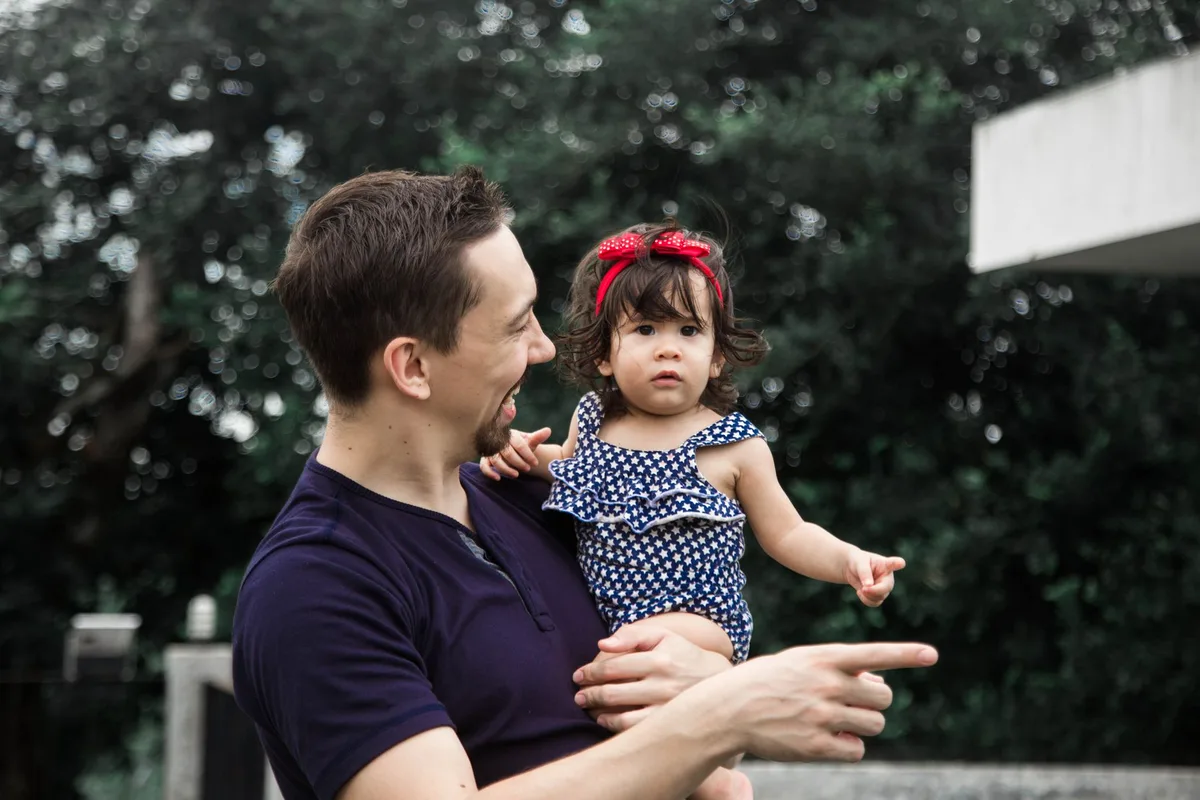
Two ordinary Saturdays, one clinic
Webster Groves is a family-oriented community with older housing stock and real yards, and the pain pattern that shows up here reflects both. New parents — especially those within a year or two of a pregnancy — carry a toddler on one hip while managing a house that predates modern ergonomics, and the sacroiliac joint and sciatic nerve are common casualties of that combination. A few doors down, a homeowner spending a Saturday on yard work that used to be routine strains a low back that has quietly lost some resilience since the last time that much digging happened. Neither is unusual. Both deserve a real diagnosis instead of a shrug.
Both populations also share a tendency to minimize the complaint at first, for related but different reasons. A new parent is often told, directly or indirectly, that some pain is simply the toll of having had a baby, and stops mentioning it at checkups once the standard postpartum window has passed. A homeowner managing a big yard tends to treat a recurring strain as a fitness problem to push through rather than a mechanical one to diagnose. Both framings delay a call that usually should have happened months earlier.
Eighteen minutes, and worth the trip for either problem
From Webster Groves the drive is eighteen minutes free-flow and 11.1 miles, typically out to I-44 or I-64 and over to I-70, off at Woodson Road next to Lambert Airport. Add time during school pickup and drop-off windows if your route runs near Webster University; outside of those hours the drive is straightforward. The clinic parking is at the door, which matters when you are managing a toddler along with the appointment.
Why postpartum sacroiliac and sciatic pain gets dismissed, and shouldn’t
Pregnancy-related pelvic girdle pain does not reliably resolve at delivery the way it is often assumed to. The research on this population tracks distinct syndromes with different prognoses, and a meaningful share of women still have significant sacroiliac joint pain or referred leg symptoms well past the standard postpartum recovery window — not because something new went wrong, but because the joint laxity and altered gait pattern of pregnancy left the SI joint mechanically different and nobody re-evaluated it. Two biological drivers are usually at work — ligamentous laxity that does not fully reverse on its own timeline, and the compensatory movement pattern from carrying a child that keeps loading the joint asymmetrically — and the behavioral one is unavoidable: nobody puts down the baby to rest a joint.
Yard work strain versus something that needs imaging
A weekend strain from digging or hauling mulch that improves over a few days is ordinary and does not need this practice. Pain that radiates down a leg, that does not improve after a week or two, or that keeps recurring every time yard work resumes is different — it suggests a sciatica or disc-related pattern that a season of ibuprofen will not fix, and the workup exists to tell the difference before another summer gets lost to it.
The sleep a new household never gets, and what it does to pain
Nobody schedules a family’s sleep around an aching sacroiliac joint or a strained low back, and that is exactly the problem. Fragmented sleep from a newborn, or from a toddler who still wakes at 2 a.m., lowers the threshold at which the nervous system registers an ordinary movement as painful, so the same joint that might feel manageable on eight hours of uninterrupted sleep feels considerably worse on the four- and five-hour stretches new parents actually get. That is one biological driver compounding the mechanical one already discussed, and the social driver holding both in place is unavoidable in this population: a household that runs on a young child’s schedule does not have room to prioritize an adult’s recovery, however badly that recovery is needed.
That does not mean nothing can be done until the sleep improves on its own. It means the plan has to account for the sleep disruption honestly rather than write a prescription that assumes a full night’s rest the patient is not actually getting, and it is one more reason the behavioral and lifestyle side of this practice is not treated as a footnote to the injection.
Common questions
I had a baby over a year ago. Can postpartum pain still be the cause now?
Yes — sacroiliac joint changes from pregnancy do not automatically reverse on a fixed timeline, even years later, and the sacroiliac joint pain page explains how that gets confirmed.
How long is the drive from Webster Groves?
Eighteen minutes free-flow, out to I-44 or I-64 and over to I-70, next to Lambert Airport; the full regional picture is on the St. Louis page.
Will my insurance cover the evaluation?
Most plans cover a diagnostic pain management evaluation; call the office through contact to verify your specific benefits before the visit.
How does disrupted sleep from a new baby factor into treatment?
It matters more than people expect — fragmented sleep changes how the nervous system processes pain signals, and that gets addressed directly; see sleep, movement and behavior for how.
Related reading
Carrying a child and carrying pain do not have to be permanent partners
Tell us when it started, even if that was two years ago. The timeline usually points straight at the cause.
4479 Woodson Rd, Suite 401
St. Louis, MO 63134
Next to St. Louis Lambert International Airport, off I-70 at Woodson Road.
Sources
- Fiani B et al. Sacroiliac Joint and Pelvic Dysfunction Due to Symphysiolysis in Postpartum Women. Cureus, 2021. PubMed 34786225
- Albert H et al. Prognosis in four syndromes of pregnancy-related pelvic pain. Acta Obstetricia et Gynecologica Scandinavica, 2001. PubMed 11380285
- Ronchetti I et al. Physical characteristics of women with severe pelvic girdle pain after pregnancy: a descriptive cohort study. Spine, 2008. PubMed 18317182