PAIN MANAGEMENT IN UNIVERSITY CITY
The Loop has twenty-year-olds landing wrong off a bike and eighty-year-olds landing wrong on a staircase. Both end up here.
University City runs from Washington University students and Loop cyclists in their twenties to residents in century-old houses with narrow staircases in their eighties — two very different populations, thirteen minutes from the same clinic.
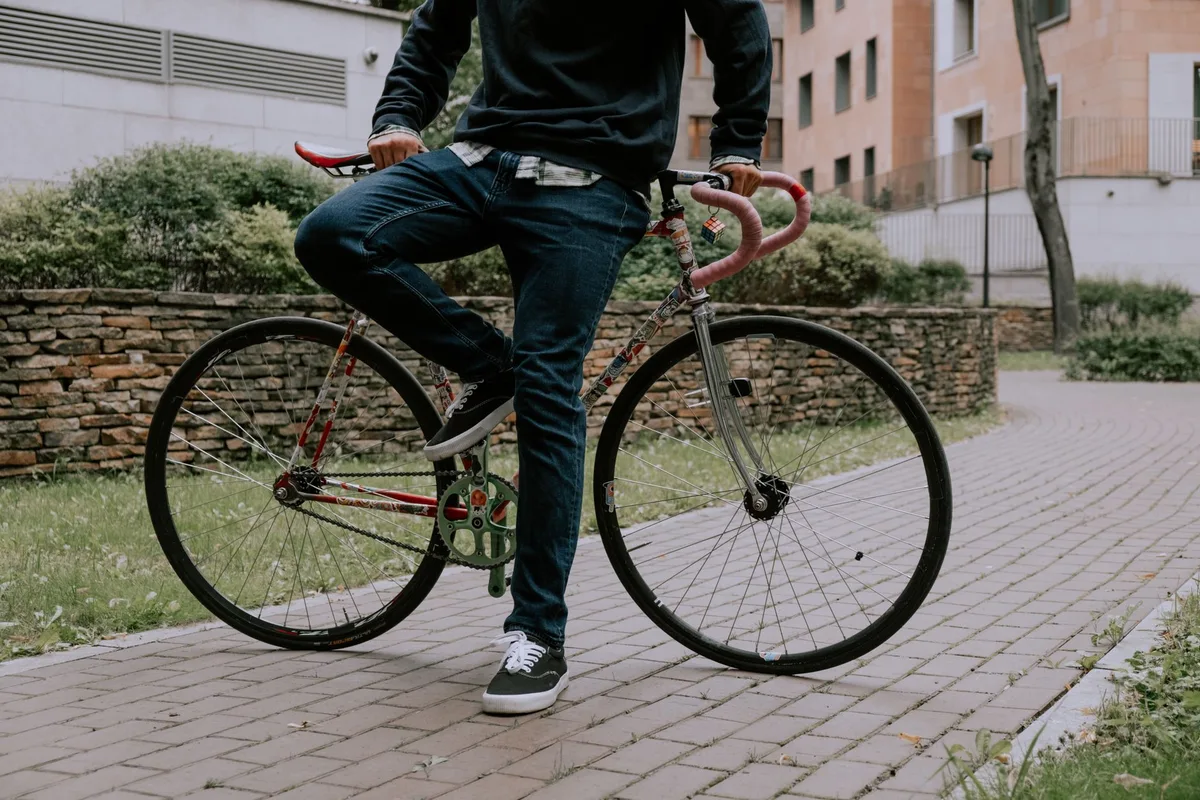
One neighborhood, two very different injuries
University City is unusual in how it splits. Around the Loop and Washington University, the pain that shows up is young and mechanical — a low back strained sprinting for a bus, a hip flexor from cycling on brick streets, a shoulder from an intramural league — the kind of injury that responds fast when treated fast and gets complicated when three months pass with nothing but ice. A few blocks over, in the older housing stock with its narrow staircases and uneven yards, the pain is degenerative — knees and hips worn down by decades of stairs, backs stiffened by gardening on uneven ground. Both populations are treated at the same clinic; almost nothing about the visit looks the same.
The younger group also tends to arrive with a specific bias worth naming: an assumption that a sports or cycling injury will simply resolve with rest, the way most did in college. That assumption is usually right, and it is worth respecting rather than over-treating a strain that would settle on its own. It stops being right at a specific, identifiable point — when pain persists past several weeks despite rest, when it changes character, or when it starts limiting daily movement rather than just the activity that caused it — and that is the point worth calling rather than waiting through another month of ice.
Thirteen minutes, and parking that does not fight you
From University City the drive is thirteen minutes free-flow and 6.9 miles, generally out to I-70 and off at Woodson Road next to the airport — a shorter trip than parking near the Loop on a Saturday. Add time during the school-year rush around Washington University’s shift changes and home games; outside those windows the route is quick. The Woodson Road lot has direct parking at the door, which matters more than it sounds for anyone managing a hip or knee that does not want a long walk from a garage.
Why a strained back at twenty and a stiff hip at eighty need different tools
A young athlete’s low back pain is usually a soft-tissue or disc-related mechanical problem in an otherwise resilient body, and image-guided trigger point work paired with a real return-to-activity plan — not just rest — is what gets a cyclist back on a bike without the injury recurring in three months. An older resident’s hip or knee pain is more often osteoarthritic, layered on decades of stair use, and two biological drivers compound each other — cartilage and joint-space loss from mechanical wear, and the low-grade systemic inflammation that makes osteoarthritic joints hurt more than their X-rays alone would predict — with a social driver underneath both: a house that was never built for a body that changes. Neither population gets a generic protocol here.
What the visit adds if you came from a fall or a crash
A fall on a University City staircase and a bicycle-versus-car collision near the Loop both fall under this practice’s after a car accident and injury workup, because both need something an ordinary pain visit does not: an exam and documentation timed to the event, not to whenever the pain finally got bad enough to call. Waiting weeks after either kind of injury makes the record harder to defend later, whether the question is insurance, a claim, or simply what happened to your body.
What changes at the first visit, for either population
A twenty-two-year-old cyclist and an eighty-year-old resident navigating a narrow staircase both get the same starting discipline — a physical exam that correlates to whatever imaging exists, a real conversation about what the pain stops you from doing, and no procedure on day one — but the questions inside that visit diverge fast. For the younger patient, the exam is trying to establish how much load a specific structure can safely take on the way back to activity, because the biggest risk in this group is returning too fast on an incomplete diagnosis and turning a six-week injury into a six-month one. For the older resident, the exam is weighing mechanical wear against systemic inflammation and asking a more basic question first: is this joint pain alone, or is a narrowed spinal canal referring pain into a hip or leg that looks like it belongs to the joint but does not.
Both conversations end the same way — with a plan stated in terms of function, not just a pain number, because “back on the bike by a specific date” and “able to manage the stairs without holding the rail” are both real, measurable goals that a generic prescription pad does not capture.
Common questions
Is there parking near the office, unlike the Loop?
Yes — free parking directly at the Woodson Road building, detailed on the contact page along with the exact route.
What procedures actually help a cycling or sports injury?
It depends on the structure — a strained muscle usually responds to trigger point injections and a real activity plan, while a disc or joint problem needs its own diagnostic workup first.
Do you handle a fall or a bike-versus-car collision the same way?
Both are documented the way an accident case is, with the exam timed close to the event, because that timing matters later even if it does not feel urgent yet.
What does the first appointment actually involve?
An exam, an imaging review, and a conversation about what the pain actually stops you from doing, described fully on the what to expect page.
Related reading
Whichever University City you came from
Tell us how the pain started — a fall, a ride, or just a house that never had an elevator — and we will build the plan around that.
4479 Woodson Rd, Suite 401
St. Louis, MO 63134
Next to St. Louis Lambert International Airport, off I-70 at Woodson Road.
Sources
- Thornton JS et al. Treating low back pain in athletes: a systematic review with meta-analysis. British Journal of Sports Medicine, 2021. PubMed 33355180
- Wall J et al. Incidence, prevalence and risk factors for low back pain in adolescent athletes: a systematic review and meta-analysis. British Journal of Sports Medicine, 2022. PubMed 36150752
- Fehlings MG et al. The Aging of the Global Population: The Changing Epidemiology of Disease and Spinal Disorders. Neurosurgery, 2015. PubMed 26378347